The Peoples’ Paperback
Why I love Mass-Market Paperbacks

The mass-market paperback — the “pocket book”, the kind you could slip into the back pocket of your jeans — is dead. Maybe. It seems that most publishers have given up on the format, but there are rumblings that some are reconsidering.
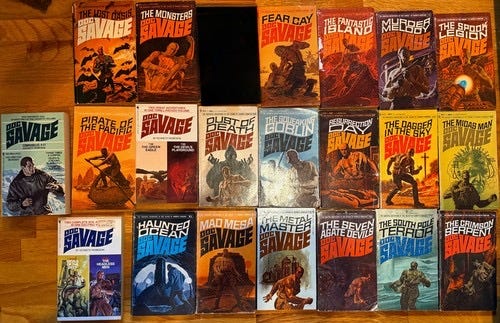
I grew up on the MMPB. The ‘60s and ‘70s were the golden age for the format, as so many genre books were published as MMPB originals — pretty much all of Philip K Dick’s oeuvre, for instance. The classic pulps — Doc Savage and The Shadow — got a new life for a new generation (mine) through MMPBs. (And with gorgeous James Bama covers for the Doc Savage series!) Even J.R.R. Tolkien’s Lord of the Rings got it’s rocket launch into the stratosphere of the American public’s consciousness in MMPBs, first through Ace’s unlicensed editions with their hallucinogenic covers, then with Ballantine’s official editions with Tolkien’s art on the covers.
MMPBs were affordable — especially in used books stores. (Insert a nostalgic salute to the now-deceased Hole in the Wall Books in Falls Church, VA.) For a good portion of my early adult life, I couldn’t really afford to buy new hardbacks, but MMPBs were accessible. Even in my local library as a kid, there was a spinner rack by the door with a host of MMPBs. And they were far more portable, for when you and your roommates wound up moving every few months from one rental to the next.
And the covers! So many incredible covers, by artists such as Michael Whelan (those Moorcock Elric books! The ERB Barsoom books!), Neal Adams (Tarzan books!), the Brothers Hildebrandt (okay, I could never finish the Sword of Shannara, but I tried because of the art), James Bama (see above), Gervasio Gallardo (the Ballantine Adult Fantasy Series — no, not softcore, but reprints of classic fantasy not written specifically for kids, which was the common assumption at the time: Lord Dunsany, William Morris, etc.), Don Maitz (Gene Wolfe’s Book of the New Sun), and so many many more.
Truly the Peoples’ book format. Once developed for soldiers, then for train passengers, they proliferated in all sorts of places where people who didn’t normally visit bookshops would go: supermarkets, 7-11 spinner racks, drug store shelves, and even vending machines!
I am super pleased that my own books (for White Wolf’s Werewolf: the Apocalypse) were published as MMPBs.
But… the trick for the format’s success was mass sales. The price was low, but they could sell in large volume. That’s not something most publishers can accomplish these days. Tradebacks are the more sensible format. Still… tradebacks don’t fit in your pocket. Sure, a ton of ebooks can fit in your Kindle paperwhite (and I certainly have a lot of them myself), but it’s just not same as flipping open a MMPB.
MMPB do survive in specialty books, priced more like tradebacks, such as Brackenbury Books’ “Blue Fire: A Jirel of Joiry Tale” by Molly Tanzer. As I write, their crowdfunding for a MMPB edition is almost over — hurry! Also, the “Outlaw’s Apprentice” graphic novel in MMPB! So there’s still some love for MMPBs out there.
I still haunt used bookstores for MMPBs that I haven’t already collected, but most of these stores have caught on to how collectible they are and are starting to charge high prices for them. I’m glad I completed by Travis McGee collection before all that!
Well, that’s really all I meant to say. Just an ode to a beloved book format. If you've got a favorite MMPB edition, share it in the comments!
I share your love of the format! I am seeing some books in the consciousness/philosophy space using it -- for example, Eric Wargo's Becoming Timefaring. Also The Dark Forest Anthology of the Internet. Print on Demand allows for the dimension to come back without the need for massive sales. I love the format precisely because it fits in my back pocket and allows me to take a walk in the park on on the train without needing my dang man bag. Also, I will soon be publishing the second edition of Lucid Talisman in a similar pocket-able size 4.25 x 7 (same width, slightly taller).